Service encounters3 min read
When a parcel has not arrived, a clear sequence helps the other person find the problem. Practise separating what the tracking page said, what you personally observed and the action you are requesting. You can sound calm without hiding that you need help.
Read the guide ↗
Messages3 min read
Changing a plan involves two separate pieces of information: the arrangement that currently exists and the replacement you propose. This lesson practises the move from one to the other, including what to say when your first alternative is unavailable.
Read the guide ↗
Service encounters3 min read
A return conversation becomes easier when you describe the item and its problem before asking what options are available. Practise observable details, simple past events and a specific request. This is language practice; store policies and consumer rights depend on the situation.
Read the guide ↗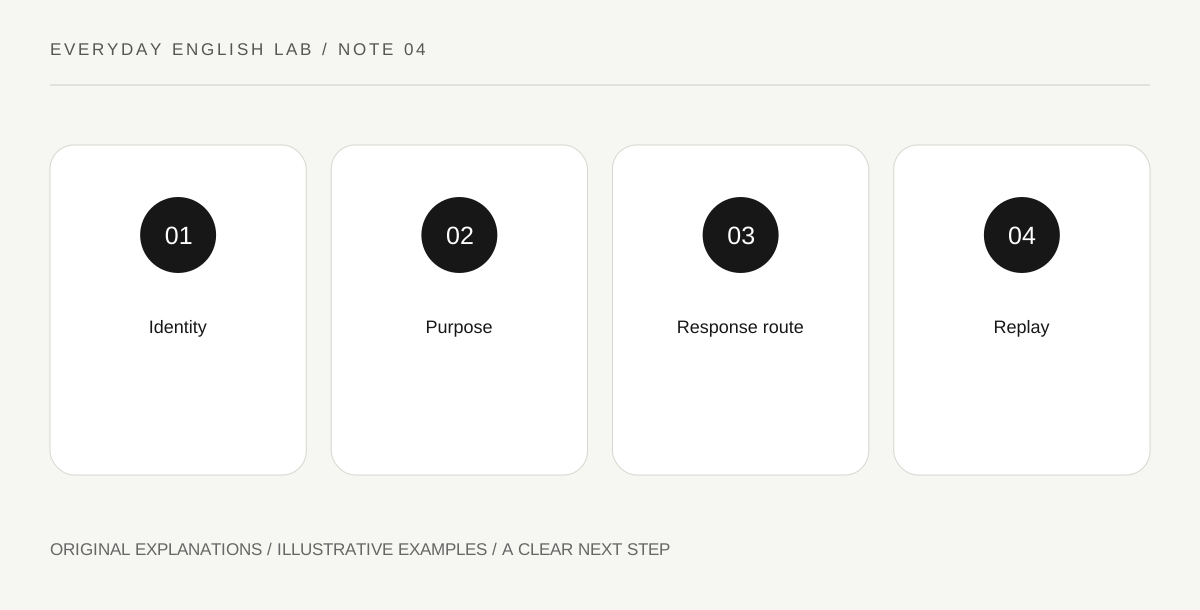
Messages3 min read
A useful voicemail contains a clear identity, purpose and next action. Practise one short message that can survive imperfect audio. The goal is not to speak quickly; it is to make the important parts easy to hear and reconstruct.
Read the guide ↗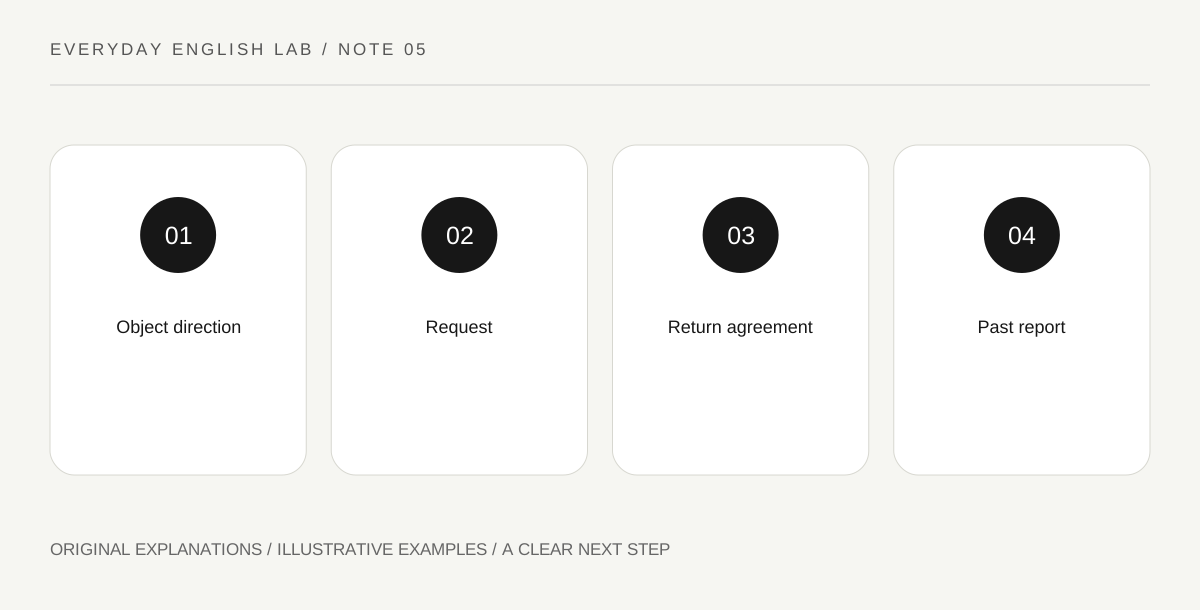
Sound and grammar3 min read
Borrow and lend describe the same temporary transfer from different directions. A practical object exchange makes the distinction easier to remember than memorizing two isolated translations. This lesson adds return arrangements so the whole interaction has a clear endpoint.
Read the guide ↗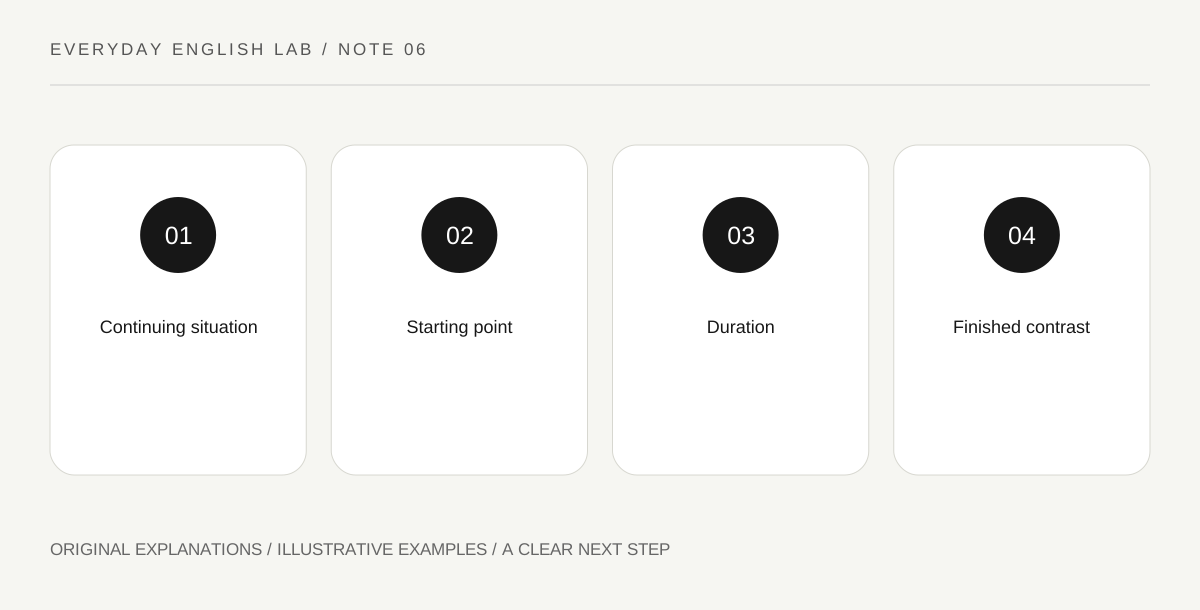
Sound and grammar3 min read
A starting point and a length of time answer different questions. Practise using since and for with a situation that continues now, then contrast it with a finished period. A simple drawn timeline can keep the meaning ahead of the grammar.
Read the guide ↗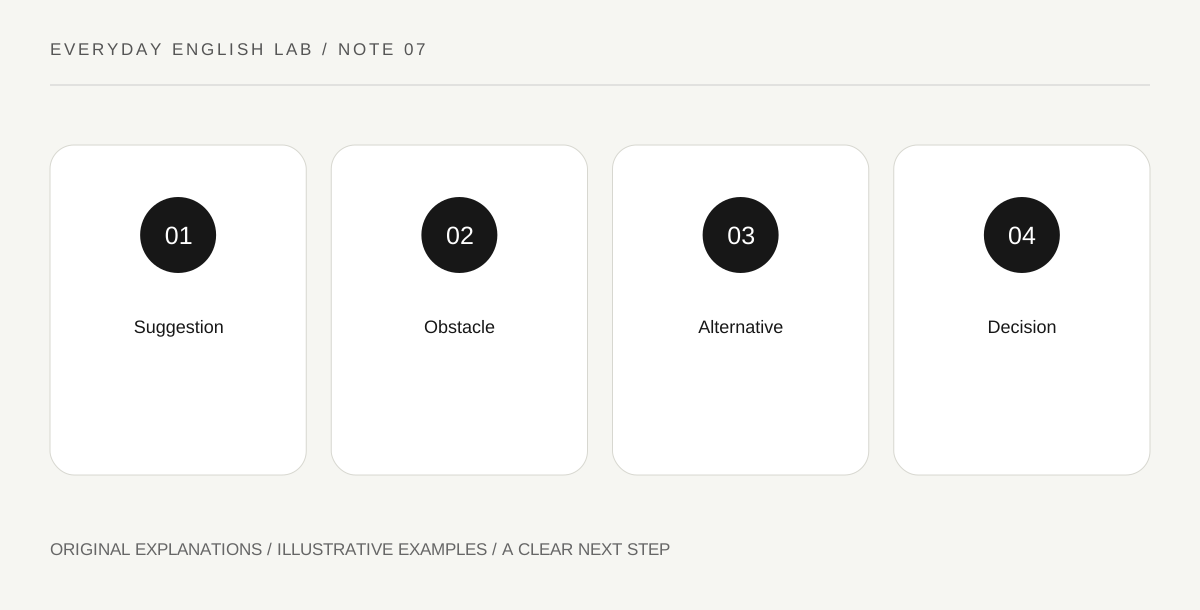
Working together3 min read
Saying no to one suggestion does not require ending the conversation. Practise acknowledging the idea, explaining a practical obstacle and offering another workable option. The useful outcome is a choice both speakers understand, including the possibility that no shared option works today.
Read the guide ↗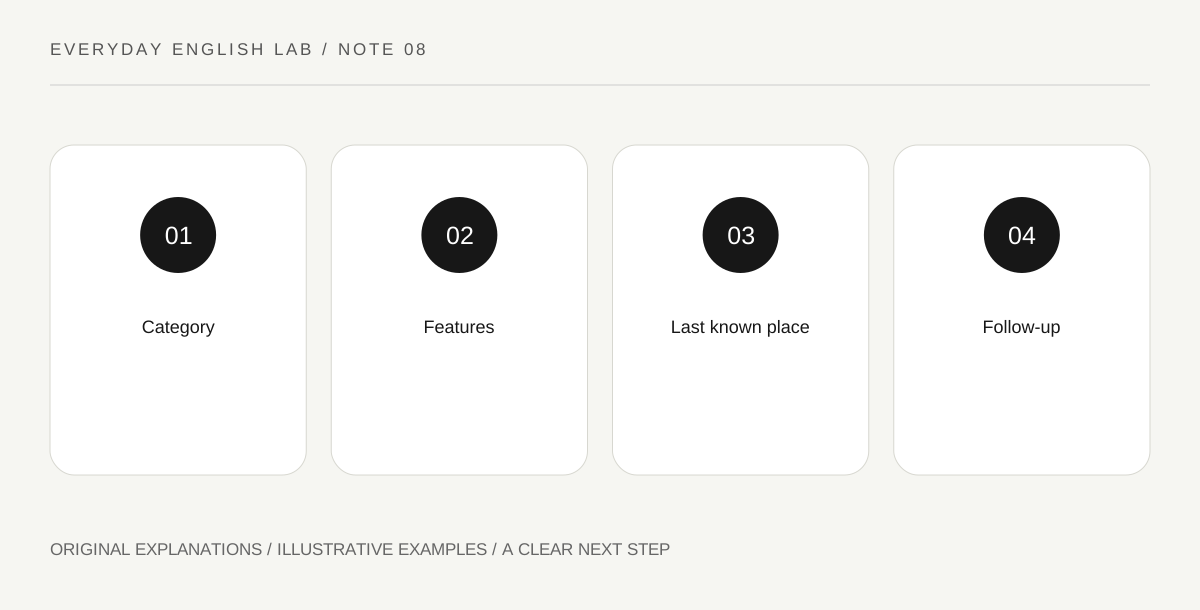
Service encounters3 min read
A lost-property description should help someone choose one object from several similar ones. Practise moving from a general noun to distinctive features, then explaining when you last had the item. Use fictional objects and details when sharing practice recordings.
Read the guide ↗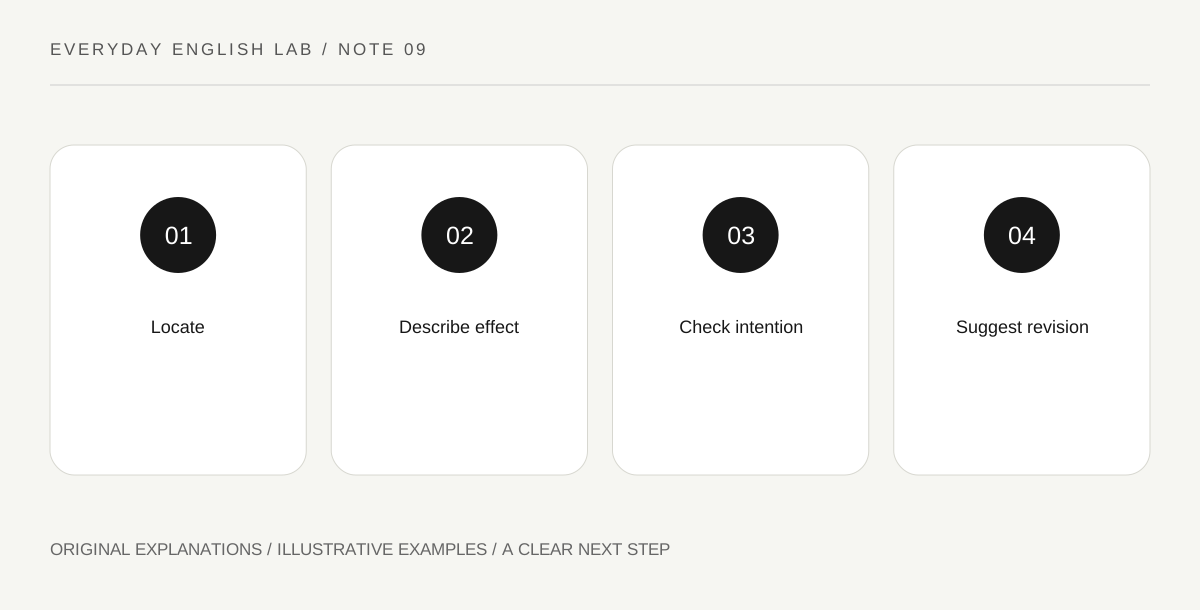
Working together3 min read
Feedback becomes easier to act on when it points to a specific part of the work and explains the reader’s experience. Practise describing one useful feature, one difficulty and one possible revision without turning a comment into a judgment about the writer.
Read the guide ↗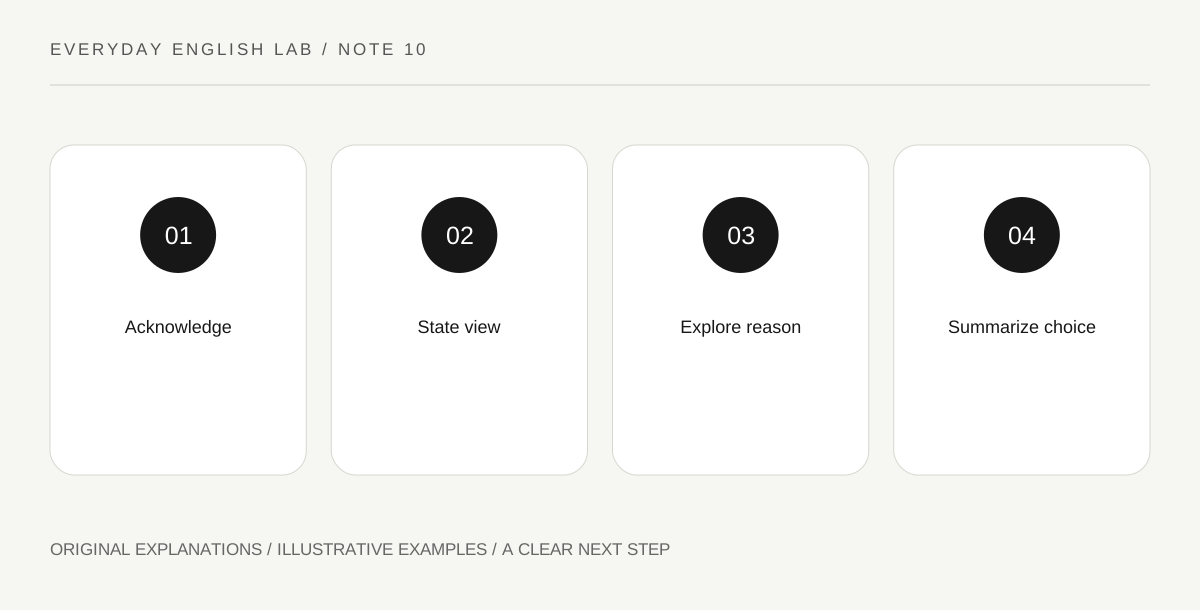
Working together3 min read
Clear disagreement can remain courteous. This lesson practises recognizing another person’s point, stating your different view and explaining one reason. You do not need an elaborate expression or a false agreement before you are allowed to express a different preference.
Read the guide ↗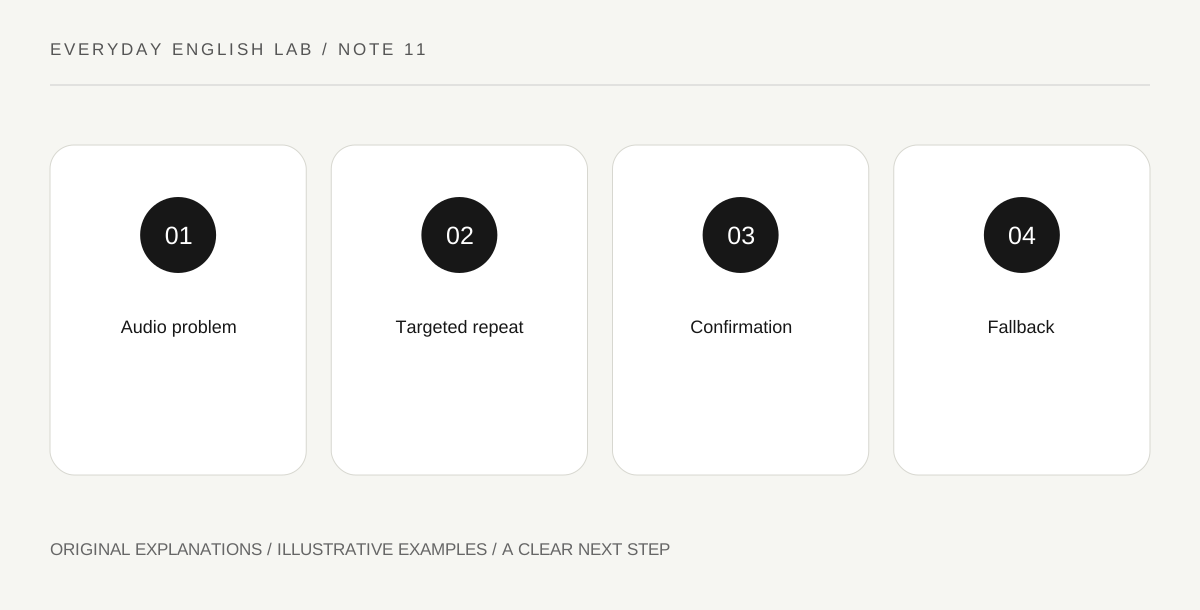
Service encounters3 min read
A poor phone connection can make familiar English feel unfamiliar. Practise identifying the missing part, requesting a targeted repeat and changing the communication channel when appropriate. The skill is to repair the conversation with enough detail for the other speaker to help.
Read the guide ↗
Sound and grammar3 min read
A short personal story needs more than a list of events. Practise an opening situation, an unexpected change and a result. Use an invented ordinary incident so you can focus on how the listener follows the story rather than on finding something dramatic to tell.
Read the guide ↗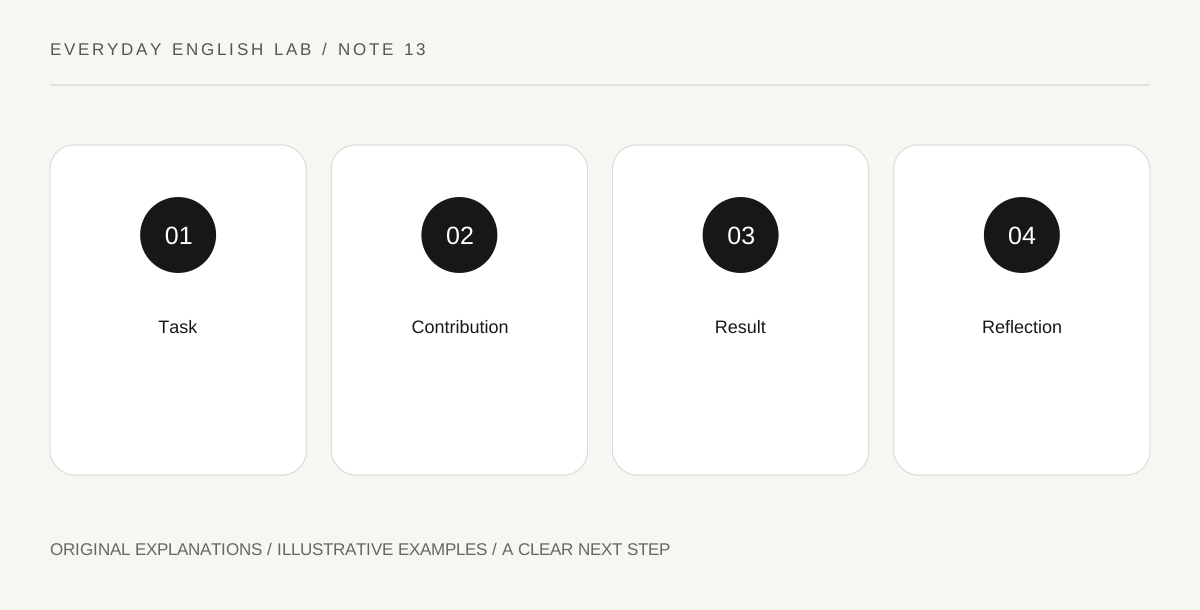
Working together3 min read
When someone asks about previous experience, a list of job titles may not show what you did. Practise one short explanation of a task, your contribution and its result. Use a fictional project if you are learning in a public group.
Read the guide ↗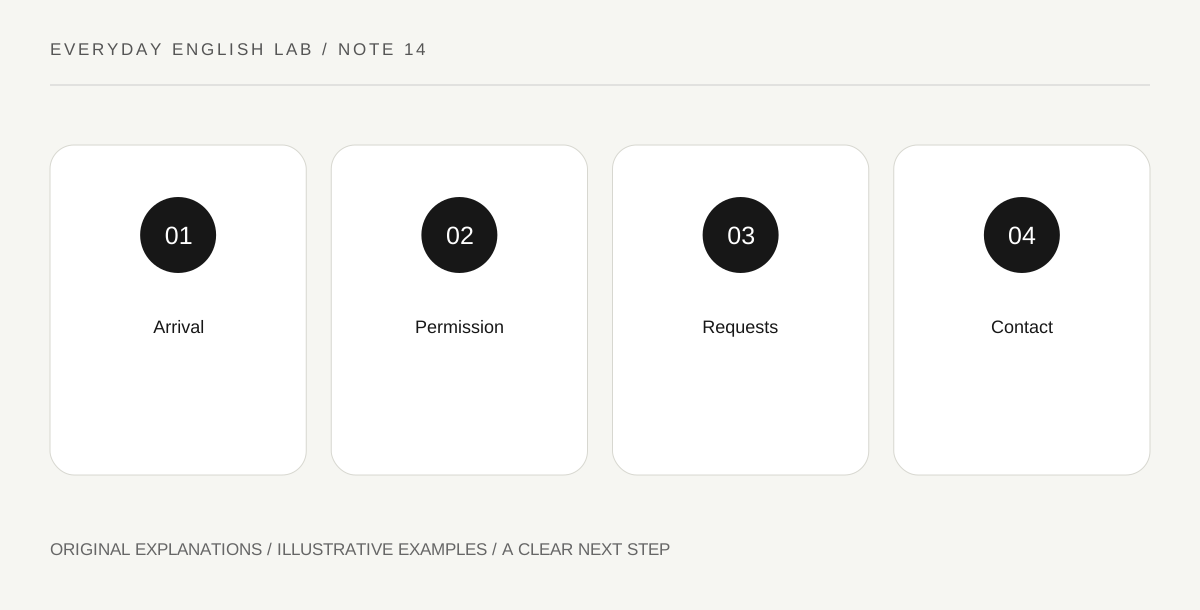
Messages3 min read
A note for a guest should answer a few immediate questions without requiring you to be present. Practise grouping useful information, distinguishing a request from permission and writing a clear contact instruction. Keep access information fictional during language practice.
Read the guide ↗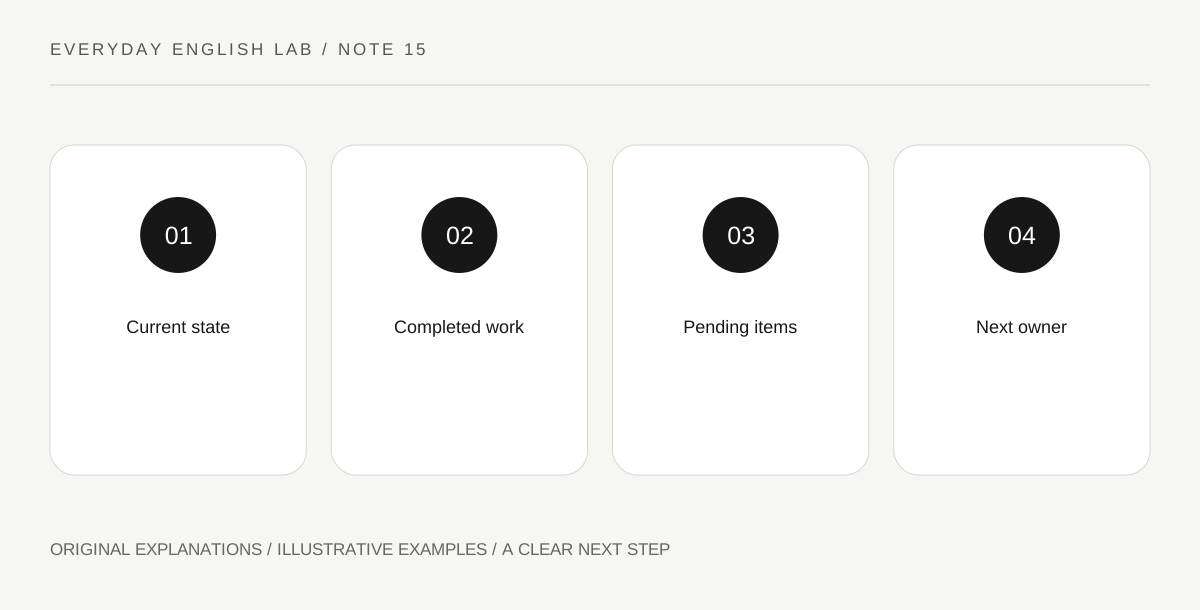
Working together3 min read
A task handover should let another person continue without reconstructing your whole day. Practise dividing the message into what is finished, what remains and what the next person should do. This structure works well with a small fictional office or club task.
Read the guide ↗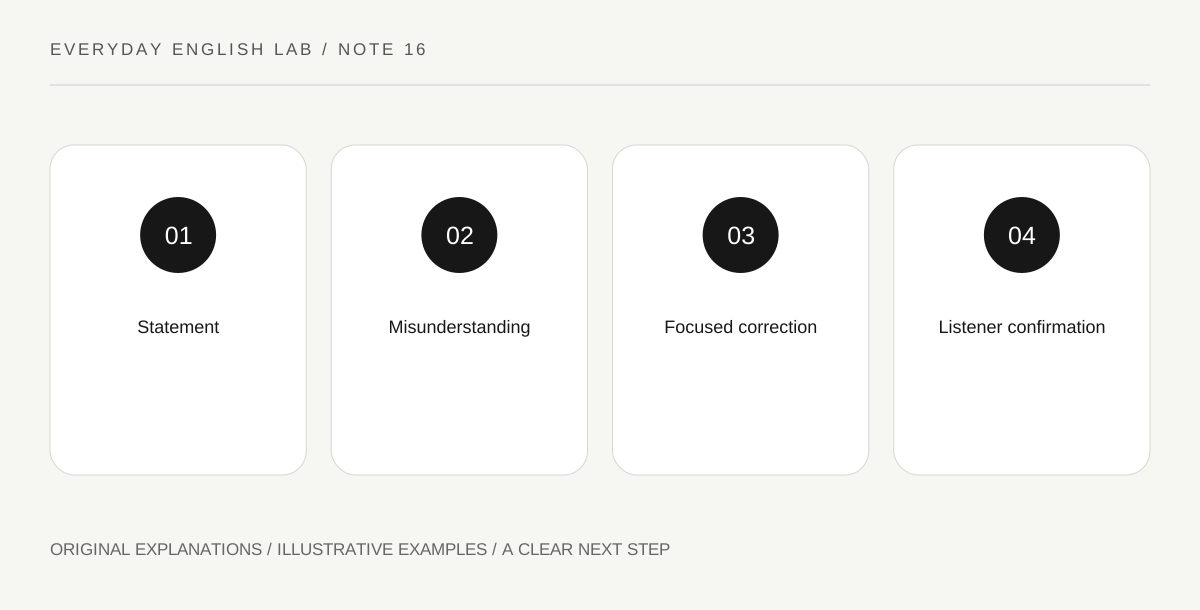
Sound and grammar3 min read
The same words can draw attention to different information. Practise emphasizing the part you are correcting while keeping the rest of the sentence understandable. This lesson uses ordinary scheduling and object descriptions so you can hear a difference in meaning without learning a new vocabulary list.
Read the guide ↗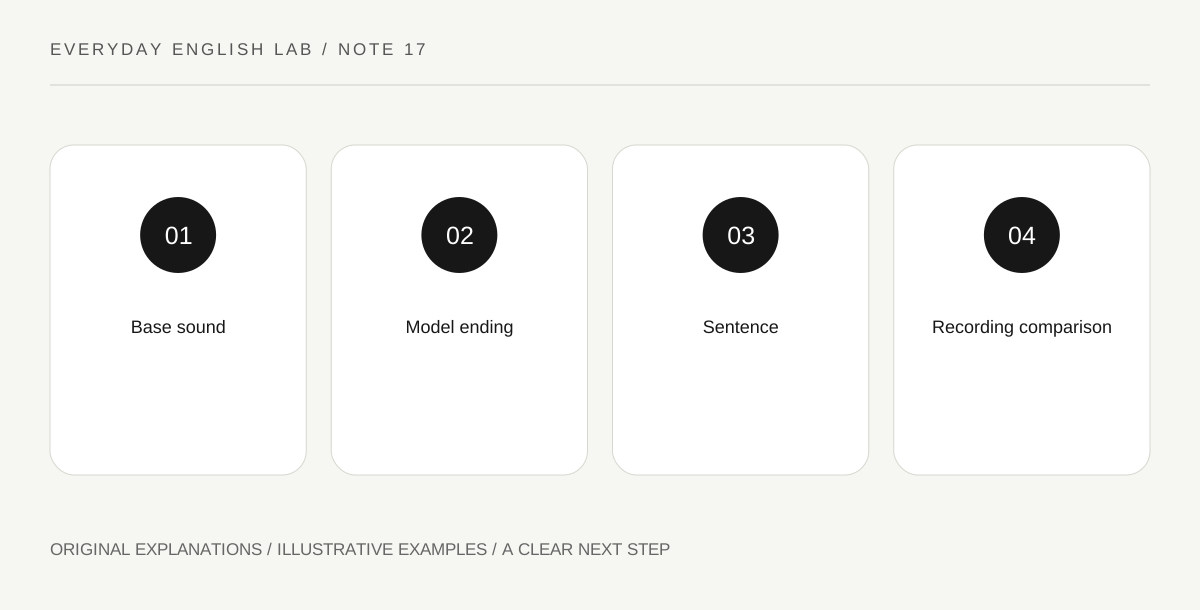
Sound and grammar3 min read
Regular past-tense verbs share the written ending ed, but that ending does not always add an extra syllable. Practise a few contrasting words in short messages, listening to the final sound of the base verb before choosing the ending.
Read the guide ↗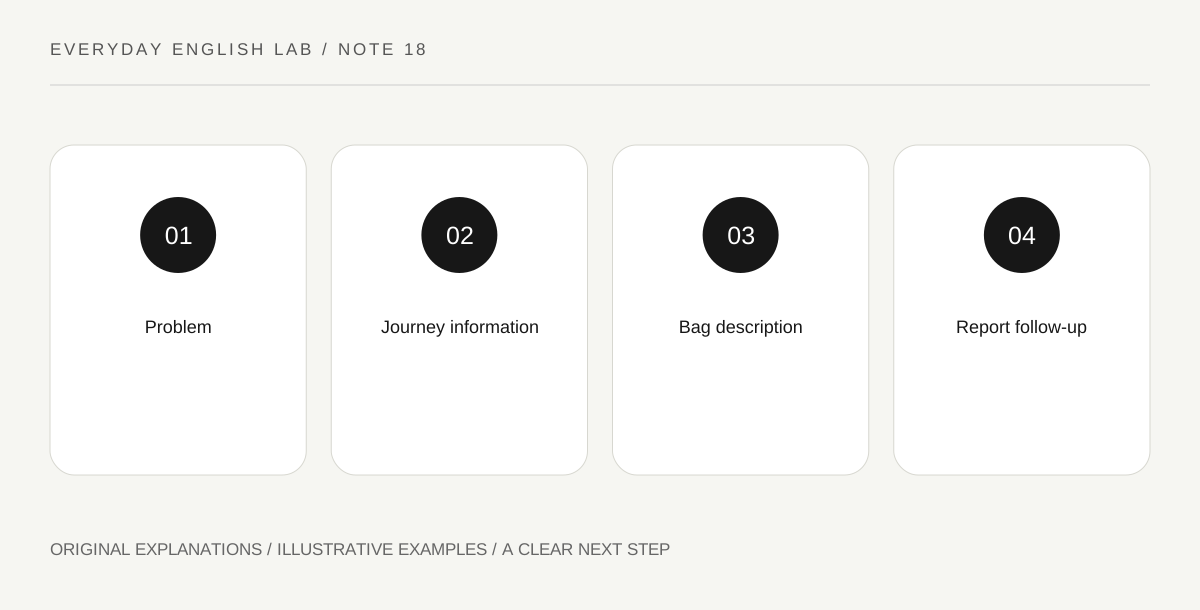
Service encounters3 min read
An airport baggage report combines a missing object, a journey and a description. Practise giving those details in a manageable order and asking what record or next instruction you need. This lesson teaches communication, while airline procedures vary by journey and carrier.
Read the guide ↗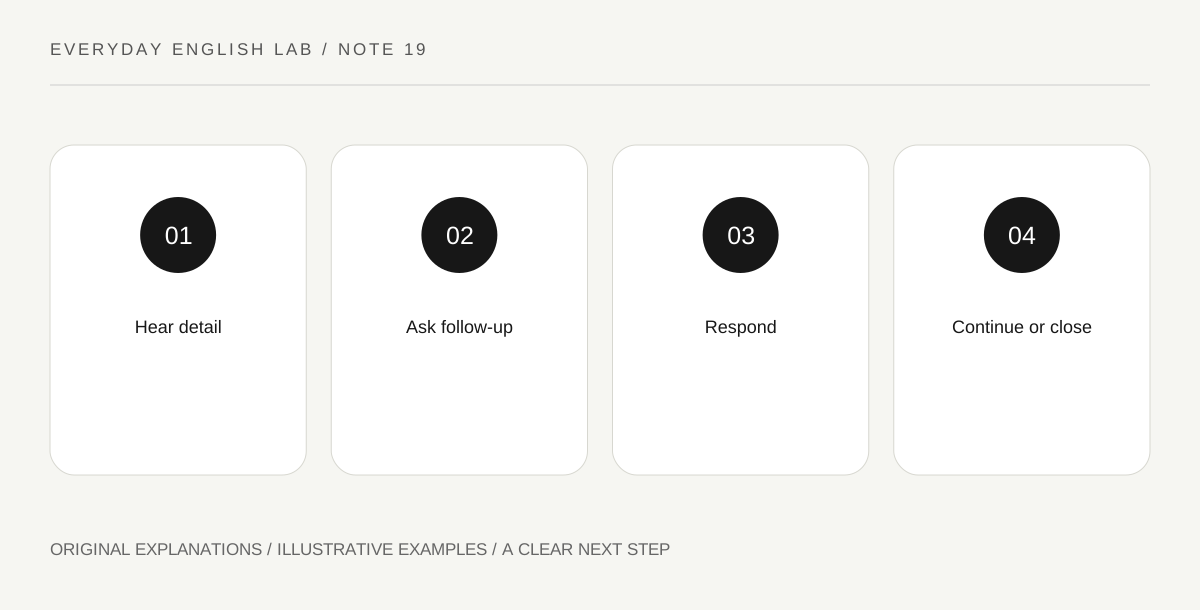
Working together3 min read
A follow-up question works best when it connects to something the other person has just said. Practise listening for one detail, asking about it and sharing a small related response. The goal is a balanced exchange rather than a sequence of unrelated interview questions.
Read the guide ↗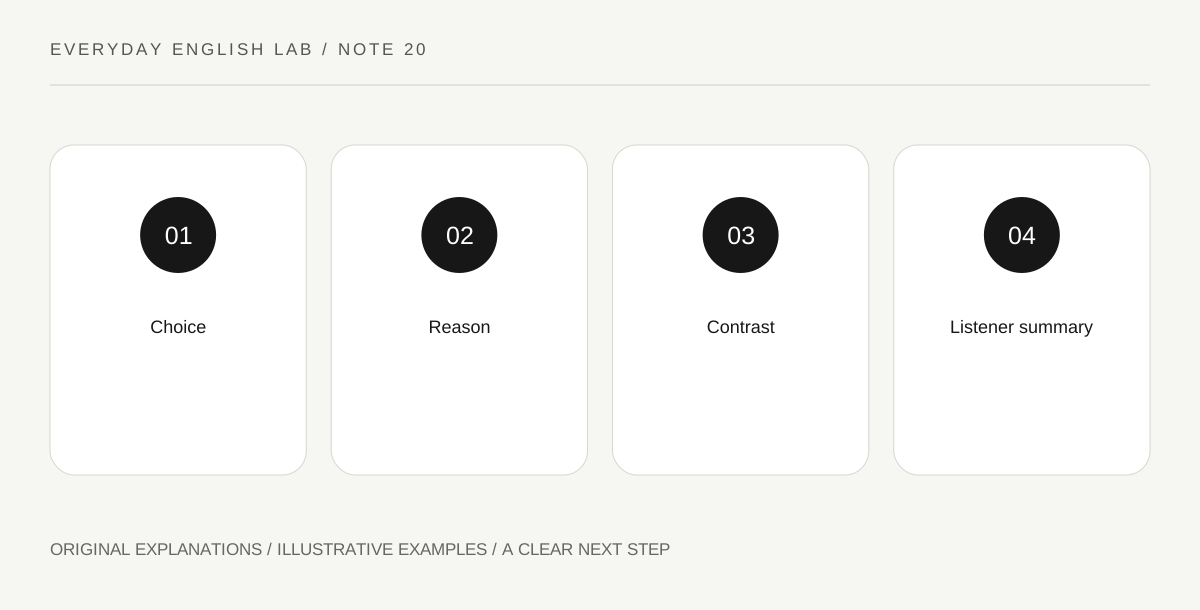
Sound and grammar3 min read
A choice can have a reason and a drawback at the same time. Practise explaining both without losing your main decision. This lesson uses ordinary plans and objects so you can concentrate on the relationship between ideas rather than on specialized vocabulary.
Read the guide ↗